Using a Storyboard to Guide Your Writing Process
Arguably the most important part of writing a book is making sure it is coherent. Whether that means the language is understandable or the plotting makes sense, people need to understand your book. When you set out on your writing journey, whether fiction or nonfiction, a storyboard can keep you on track.
You can create a storyboard either before or after you begin writing. No matter what, it will make your manuscript stronger from the first page.
What is a storyboard?
At its core, a storyboard is a visual aid to plot out your story. This is not limited to book writing — people use storyboards for all sorts of creative endeavors. For writers, visualizing all elements of a story is immensely helpful in translating their ideas to the page.
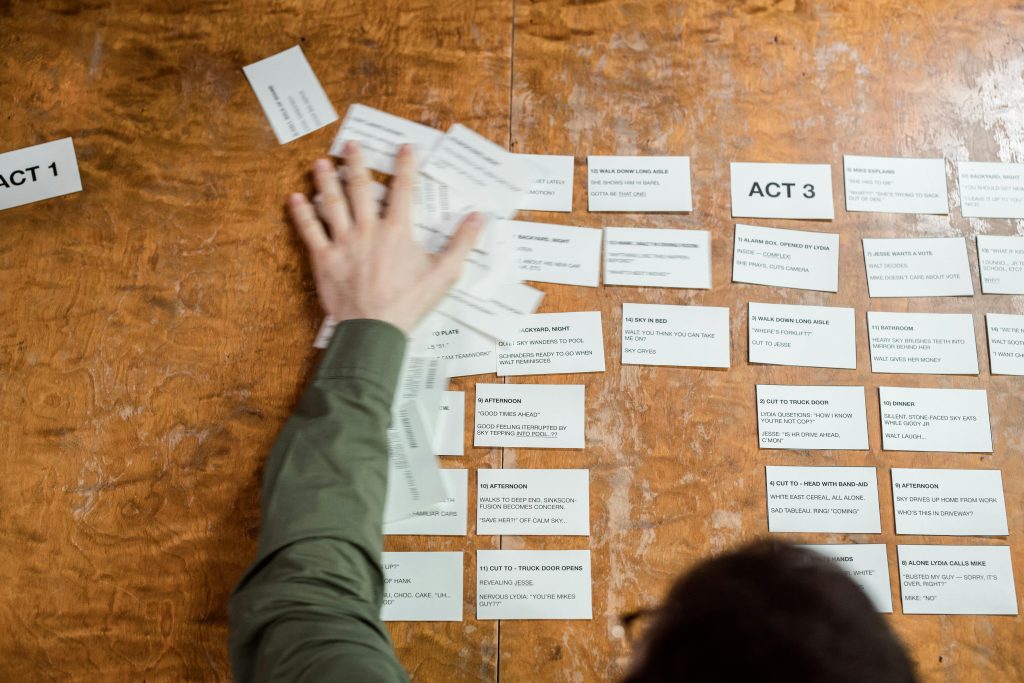
Any sort of visual aid can form a storyboard. It can even be virtual. If creating a physical storyboard, you can start with blank index cards, sticky notes, or any other paper. You will use the paper to write the elements of your story then physically place them in sequence. This allows you to reorganize and move things around as needed.
Sometimes, the thoughts in your head can be overwhelming and need some structure. That is what a storyboard provides. You can get your ideas down on paper and see it laid out in front of you. This will help organize your thoughts and see where holes may need to be gapped or ideas expanded upon.
Specific elements of a storyboard
But what goes on your cards or sticky notes? The most important thing to keep in mind is that this process is designed to help you as a writer. You can put whatever you want on the page in front of you, but here are some suggestions.
Plot and conflict
The most common element of a storyboard is major plot beats. It is important to include these so you can see the complete flow of your story. It also allows you to where you may need to expand or add more details. When you have plot beats on cards, you can arrange them in order in front of you for a direct story map of your book.
Writing down points of conflict in your story also allows you to place the conflict in the story. This shows you if there is either too little or too much conflict for the story being told. If there are long gaps in conflict, the book can become somewhat of a boring read.
Characters and motivations
Laying your characters on physical paper in front of you can show you all the players of your book. You can use the characters in front of you to put them in and out of the story as needed, as well as visualizing connections between characters. This helps you keep your characters’ relationships and actions clear.
On your characters’ individual cards, you can include facts about them, ways they impact the story, or anything else you may need to keep straight. This process can let you know if you need more characters, have too many characters, or need to flesh out your characters more. Again, the choice is yours to use this as you please.
Illustrations
Illustrations may be the most natural for storyboarding picture books, but all books can use them in the storyboarding process. These drawings can be as detailed or rudimentary as you want and do not have to reflect the finished product. In the illustrated book context, this is a clear way to visualize how the story will look on the page.
However, for non-picture books, illustrations in a storyboard will show you how readers may visualize the story in their head. It can also guide your visualization of the story.
Keeping structure in mind
While your book can be structured however you see fit, a traditional structure comes in three acts. It is not necessary to separate your book into actual separate parts; you can use this to guide your text.
First act
The beginning of your book sets up the characters, story beats, and tone of your book. This is the setup and provides character building for the rest of the book. The first act should not be the longest part of your book and be just long enough to get the ball rolling. Everything a reader would need to know for the story should be introduced here.
Second act
The second act of your book should be the longest part, where the bulk of the action occurs. This part encompasses the climax of your story where all the setup you do pays off. This is where the true story takes place and contains the most “action.”
Think of an action or science-fiction movie. The climax of the film is the big battle that wraps up the story and emotional arcs of your characters. It is often the most memorable part of the story, which is especially true for action films.
Third act
The concluding section of your book will end the story you are telling. Again, this should not be the longest part of your book because it is wrapping things up. The majority of your plot and conflict is resolved, and now your story is coming to an end.
If your book is a standalone story, this can definitively conclude their stories. If you want to continue these characters’ stories, you can set up a sequel. Wrap up your book in whatever way you think fits the story you are telling.
Storyboarding after writing
While most authors will storyboard at the beginning of the writing process, that is not a steadfast rule. Some authors prefer to write without a guide and see where their book goes. In this case, it is possible to create a storyboard after writing a draft of your book.
Creating a storyboard later in the process follows a similar process as doing so before. You should go through your text and write down the major plot beats and characters of your story. Then, you can arrange them in front of you. This creates a visual aid that shows what you put on the page.
From there, you can clearly see what your story may be lacking or needs to expand upon. This makes editing your early drafts of your book easier. You have the freedom to move elements of your book around as you deem necessary.
Make storyboarding fit your story
Storyboarding is not a one-size-fits-all guide to organizing your thoughts. To get the most out of storyboarding, it is imperative that you individualize it to your creativity. Some people just want a big picture of their story, others want more intricate details. However you decide to utilize a storyboard will help you along your journey as a writer.