Reading to Boost Your Mental Health

The Emotional and Neurological Benefits of Reading
What draws you to reading? When you are reading, do you feel at ease? Do you like reading after a long day of work or before bed to wind down for the day? If so, you are not alone.
Scientific studies have proven that reading empirically improves one’s mental health. Mental health providers can even use bibliotherapy, mindful reading often guided by a therapist, in their treatment and support. While this is rarely the only form of mental health treatment, reading’s power on the mind is noteworthy.
More generally speaking, reading just makes people feel good, using their brains to their full potential. This article will briefly run down some of the emotional well-being that reading boosts.
Stress Relief
Reading books is a classic way to unwind at the end of a long day. It is a method to clear the stress from the day before going to bed and starting a new one. Many people do not work in jobs that involve reading, so this allows them to use a different part of their brain.
You can read any genre to get this stress relief, even if it may seem unlikely. In fiction, lighthearted fare with a humorous edge is an obvious genre, but it is ultimately up to personal taste. Some people favor horror or thriller stories and read those to calm their mind. Alternatively, a passionate romance or a poetry collection can really make your mind burst with imagination.
Other people may prefer reading nonfiction to destress. For example, reading a memoir or biography about someone’s favorite politician or celebrity can be fascinating. People can even read more technical nonfiction books about topics in which they are passionate. No two people have the same exact taste, and any kind of book can relieve stress.
Mental Health and Life Guidance
People can also use reading to more directly improve their mental health. Reading self-help guides or inspirational stories can help foster personal growth. This is most likely for readers who feel lost or astray in their lives and a boost of inspiration. There are self-help books for nearly any situation you may find yourself in. Reading these is a clear and direct way to work on your mental health through reading.
Putting Your Life in Perspective
One of the greatest benefits of reading is that it opens your eyes to new worlds. From fiction stories set in foreign lands to biographies of those less fortunate, reading is crucial. Seeing how other people live their lives can do immeasurable work at putting your life in perspective. Even if you are not struggling with mental health, it never hurts to put your life in perspective. There is a whole other world out there, and seeing others’ lives can be eye-opening.
Social Skills and Culture
Another somewhat-surprising result of consistent reading is that it can evolve one’s social skills and understanding of culture. Especially when reading fiction or other works with dialogue, reading exposes you to new social situations. Seeing how people and characters navigate various situations allows readers to place themselves in those situations. Exploring the aftermaths of characters’ actions can further develop how readers navigate social situations.
Reading can also expose readers to new cultures previously out of reach. This alone can do so much to expand any reader’s horizons for what is out there in the world. Thus, readers will be familiar with new cultures through reading a wide range of books.
Inspiration for Future Writing
Reading can also inspire people to become writers of their own. By improving one’s emotional strength and mental health, books can make readers more confident in themselves. Even readers who did not previously consider writing can want to start writing as a result of life-changing books.
Anyone who becomes compelled to begin writing a book of their own can start whenever they want. Writing can itself be its own form of mental health care, no matter the genre. Once you write your book, you can explore your publishing options to help boost other’s mental health. Literature is a balm that helps the mental health of both readers and writers alike.
A Closer Look at Your Book’s ISBN

What Is an ISBN?
There are an immeasurable amount of books on the market. While each is different, it can be hard to tell apart books with similar titles or subjects. The most efficient way to tell different books apart from one another is the International Standard Book Number (ISBN). This allows booksellers, libraries, and any other interested people or businesses to identify the book. Anyone can search your book’s ISBN and find everything they need to know about your book.
The ISBN is the unique numerical identification number assigned to all books. This number is assigned to authors or publishers based on their home country. Understanding the role of ISBNs is crucial to being successful in the publishing industry.
What Does an ISBN Look Like?
If you grab a book off your shelf, you can usually find the ISBN on the back cover. Often, the ISBN will be accompanied by a barcode and located right above it. Please note, an ISBN is not the same thing as a barcode number, they just have a similar purpose. Currently, ISBNs consist of 13 digits — it used to be 10 until 2007, when it was raised to meet demand.
The first three digits are the prefix of the number. This number is either 978 or 979. The prefix accounts for the three digits added to ISBNs in 2007. 978 is the prefix used for the older, shorter 10-digit codes, while 979 was added for the added inventory.
Next, is the registration group of the book. This number is based on the country and language of the book’s origin. This number can be anywhere from one to five digits, and some countries have multiple. For example, the registration group for the United States is either 1 or 0. Examples of groups of various lengths are Denmark (87), Peru at (612 or 9972), and Bhutan (99936 or 99980).
The third part of an ISBN is the registrant element. These digits represent the specific publisher or imprint releasing the book. This can be anywhere from one to seven digits to identify the entity. Cloverly’s registrant code is 89743.
The next part is the publication element. These digits identify the book itself, including the edition and specific publication. This can be up to six digits. The length of each of these elements is affected by the size of the publisher and their catalog.
The final part is the check digit. This is the final one digit of the ISBN and acts as a safeguard to make sure the rest of the ISBN is correct. There is a mathematic equation to figure this number out, but that is not something authors have to worry about.
Putting all these sections together creates a 13-digit ISBN that identifies your individual book.
How to Get an ISBN?
Most publishers, including Cloverly, take care of getting an ISBN for your book. However, self-publishers are also able to get their own ISBN for their book. The Library of Congress, which catalogs books, uses ISBNs in their work, but they do not directly assign ISBNs. That service is outsourced to Bowker Publishing Services. Bowker sells ISBNs for individual books, as well as packages of larger quantities. This is the official ISBN agency for the United States, but each country has their own provider.
As a publisher, Cloverly receives a block of ISBN from Bowker that we assign to our newly published books. We handle the entire process, making sure your biggest focus should be on making your book of your dreams. Each version of a book — hardcover, paperback, eBook, audiobook — requires a unique ISBN. Cloverly handles all of it.
St. Patrick’s Day Stories on the Page

Celebrating the Luck of the Irish this St. Patrick’s Day
Every March 17, people with Irish ancestry celebrate a day highlighting their heritage: St. Patrick’s Day. Most Americans use the day to break out their green clothes, drink beer, and go to a lively parade. However, as the name implies, the day has religious roots that stem back to St. Patrick himself.
St. Patrick’s Day books can be fun for audiences of all ages, even non-Christian people. Children can enjoy picture books filled with green pictures, while adults can escape into an Irish romance. No matter what direction you take your St. Patrick’s Day story, understanding the background of the day is helpful.
History of St. Patrick’s Day
Obviously, St. Patrick’s Day honors the real-life St. Patrick. Specifically, March 17 is St. Patrick’s feast day, which is a day that honors the life of a holy person. St. Patrick was a fifth-century missionary who brought Christianity to Ireland.
There are both legends and truths to St. Patrick’s story. In the most famous tale, St. Patrick is said to have expelled Ireland of all snakes. He also is said to have popularized the concept of a shamrock to relate to the Holy Trinity. Today, many people know St. Patrick for getting rid of snakes, and they associate shamrocks with his day.
Of course, in the 21st century, most people celebrate St. Patrick’s Day without any religious connotation. The level of Christian devotion in St. Patrick’s Day celebrations depends on the region of the world. However, it is extremely common for St. Patrick’s Day to be a huge celebration. There are often parties, parades, and fairs that celebrate both Irish heritage and all things green.
The Purpose of a St. Patrick’s Day Book
As with any holiday, there is endless potential for books about or celebrating St. Patrick’s Day. These books can be picture books for the youngest readers, biographical accounts of prominent Irish figures, or any fictional genre. They can cover any topic, not even about the holiday itself.
Children’s books are a natural choice for a fun St. Patrick’s Day book. Picture books, for example, can highlight the vibrant green that is a staple of the day. Illustrations can show the whimsy that fills St. Patrick’s Day. For older children, there can be a fun story of characters associated with the lore of the day.
Adult fiction can incorporate elements of St. Patrick’s Day into all sorts of stories. Romance stories are a natural fit to play up the beauty of Ireland and Irish culture. A gripping thriller can be about a St. Patrick’s Day-inspired murderer and the detectives on the case. Much of Irish lore is fantastical, so a fantasy story can transport readers.
Nonfiction books about St. Patrick’s Day can cover a wide range of topics. Most straightforwardly, one can write a book about the history of the day or St. Patrick himself. Alternatively, Irish-inspired poetry or spiritual guides can provide an outlet for self-expression.
St. Patrick’s Day Imagery and Themes in Literature
There are tons of imagery associated with St. Patrick’s Day that can be part of any book. Picture book illustrations, book covers, themes, and elements of plot or characters can be inspired by the holiday. Here is a brief rundown of elements to include in your St. Patrick’s Day book.
Leprechauns are some of the most common figures from Irish folklore. Often depicted as a short man with red hair, leprechauns are like mischievous fairies. They are often associated with another common St. Patrick’s Day image: a pot of gold. It is said that leprechauns hide pots of gold at the end of rainbows as a prank. Luck is a big theme for St. Patrick’s Day, and “the luck of the Irish” is a common slogan.
The color green is the most resounding image of St. Patrick’s Day. On March 17, people love to wear green clothes and decorate with green everywhere, including four-leaf clovers. The Chicago River is even dyed green to celebrate the day every year. Many cities around the world hold celebrations for all things St. Patrick’s Day, including parades, fairs, and bar crawls.
You can use any and all of these elements to write a compelling St. Patrick’s Day story. Whether your characters are celebrating the day themselves or learn about Irish folklore, there’s room for all kinds of stories.
The Value of a Seasoned Editor

How Having a Professional Outside Editor Review Your Manuscript Boosts Potential
Think of a book, any book. It can be your favorite, one from your childhood, or a new release you read last month. Why did you enjoy it so much? It was probably the characters, plot, genre, writing style, or dialogue. What might be less obvious, however, is what made your reading experience so enjoyable. That was the editing.
Before your book goes out to the general public, you must make sure it is truly ready to go. That means making sure it is structurally solid and free of typos and poor grammar. The most common way to deal with this editing process is to hire an outside editor. This is a hired professional who is an expert on editing.
Editors are truly the unsung heroes of the publishing industry. This article summarizes the role editors and copy editors play in the publishing process.
Editing vs. Copy Editing
There are two main forms of editing available in the publishing industry: editing and copy editing. They sound similar, and they do work in tandem, but each has a specific focus to tailor your work. Both an editor and a copy editor are invaluable on your journey to publication. Understanding the different roles they play will help you every step of your process.
An editor helps structure the bones of your book. They are less concerned with the nitty gritty of your manuscript and more with the big picture. Part of an editor’s job is to read a manuscript and offer their critiques, suggestions, and opinions. A good editor never forces you to make changes, but guides you when revising drafts. The final changes you make are up to you.
On the other hand, a copy editor is more detail oriented. They read your draft and suggest specific grammatical and stylistic changes. Again, it is usually up to you to approve and implement the changes. Cody Editors are not as engaged with the meaning contained in your words, just that they are used correctly.
The Importance of an Outside Editor
When you have an idea for a book, it is understandable to want to talk all about it. Part of your writing process could be brainstorming with friends and family to get ideas. From there, you can start writing until you finish your first draft. But, who will read your draft to suggest changes? As mentioned before, that would be an editor.
You may wish to have family and friends review your manuscript, which is a great idea. The people who you trust and who know you best can provide great insight into your book. However, they should not be the only other people to read your drafts. Unless they are professionals in the publishing industry, their insights are limited to personal experiences. Their perspective should just be one of many you consider in the publishing process.
Editing Your Book
No matter how good your first draft is, there will be changes made before it is published. There can be as few or as many changes between drafts as needed. Sometimes, an editor will suggest dramatic changes between drafts, and other times there will only be minor typos.
Therefore, it is imperative that your manuscript is professionally edited by someone who is outside your orbit. An outside editor does not go into your book with any preconceived notions. It is a blank slate to them, and they will go into the material as any other reader. Their suggestions hold different weight for that reason.
At Cloverly Publishing, we offer full-service book editing services after you sign your publishing agreement. We have a team of professional editors that will review your entire manuscript and flag any potential corrections. You have final control over any changes made; these are just suggestions.
Crucially, Cloverly puts the human touch in editing. Artificial intelligence (AI) will never be used to edit your book; humans will read every sentence. AI editing services lack a natural understanding of nuance in human speech and behaviors. Cloverly’s editors will keep the integrity of your work and support you every step of the way.
How to Include Diversity in Books

The Value of Highlighting Representation in Literature
Think of a young child first learning to read. They are excited to start reading and escaping to new worlds they never knew about. No matter the genre, this child will have their horizons broadened. However, imagine that while they are reading for the first time, they never see anyone who looks like them. They might still enjoy reading and gain an understanding of the world, but their relationship with literature will be different than someone with a bevy of characters who look and act like them. There are ways for authors and the publishing industry to respectfully address this long-standing issue without overcorrecting.
When you are writing a book, you will often infuse aspects of your personal life into the text. This is a natural process, writing what you know. Therefore, audiences who are from similar backgrounds and life experiences as the author might feel especially connected to the material. Authors who are not from a given group can also add to representation for another. This is the crux of why representation in literature matters, especially during Black History Month and other cultural commemorative months.
What Is Representation?
At its core, representation is when a book tells a story and features characters that represent real people’s lives. Often, this comes in the form of highlighting diverse voices in the media. This diversity can come in all shapes and sizes: race, gender, sexuality, age, socioeconomic background, etc. When someone from one of these backgrounds writes a book, their experiences will be infused in the text.
Representation often makes people feel like they are not alone in their experiences. There is not a single unifying lifestyle in the world. It helps to see a wide range of experiences in the media. For a long time, the world at large was not open to addressing underrepresentation, but things are changing.
Platforming Underrepresented Voices
It is especially important when the most underrepresented voices get a platform. When too much of one group tells their stories, it can become seen as the “norm.” The lack of diversity can alienate other groups who do not get to see themselves in the text. This is not limited to any one group, book genre, or book type. It is also not limited to the United States, as each culture has its own voices that are in the “majority” and those in the “minority.”
There are speciality book publishers that work specifically with one group to amplify their voices. They are founded because there have been historical publishers who put up impassable barriers to entry for new authors. However, general publishers can also promote diversity without having to explicitly do so. In fact, the most powerful representation is often that which goes left unsaid. Actions speak louder than words.
How to Highlight Diversity?
To counteract any underrepresentation, it is crucial that the publishing industry embrace platforming all voices. Anyone can write a book of any genre. But, not everybody has the resources and information to publish and share their books with the world. Therefore, it is crucial that publishing companies across the board do not shy away from diversity.
However, just because publishers should be conscious of diversity and representation, they should not favor any one group. That is the most important part of implementing successful representation in literature. Having a wide array of voices in the media makes everyone feel included.
Authors of all backgrounds can write stories that highlight representation, even if they are not a member of the group. As long as the representation is uplifting and not demeaning, it can be a strong act of diversity.
Books from the past often featured stereotypes and generalizations that would not be considered “good representation.” Even children’s books from the past could be subject to controversy. No matter how you feel, there are ways to acknowledge the problematic nature of some old books while amplifying new, more diverse voices going forward.
Here at Cloverly Publishing, we know that everyone deserves to have their story told. Our review process never discriminates, and we work to make sure no one feels left out of the process. Books are for everybody, and everybody should see themselves on the page.

Check out our newest One-On-One Podcast!
Cloverly Academy has just released a new edition to our Cloverly One-On-One podcast series. We interview recent and notable published authors about their inspiration and publishing journey. Click here to listen to the podcast on your favorite platform
How to Craft a Helpful Storyboard

Using a Storyboard to Guide Your Writing Process
Arguably the most important part of writing a book is making sure it is coherent. Whether that means the language is understandable or the plotting makes sense, people need to understand your book. When you set out on your writing journey, whether fiction or nonfiction, a storyboard can keep you on track.
You can create a storyboard either before or after you begin writing. No matter what, it will make your manuscript stronger from the first page.
What is a storyboard?
At its core, a storyboard is a visual aid to plot out your story. This is not limited to book writing — people use storyboards for all sorts of creative endeavors. For writers, visualizing all elements of a story is immensely helpful in translating their ideas to the page.
Any sort of visual aid can form a storyboard. It can even be virtual. If creating a physical storyboard, you can start with blank index cards, sticky notes, or any other paper. You will use the paper to write the elements of your story then physically place them in sequence. This allows you to reorganize and move things around as needed.
Sometimes, the thoughts in your head can be overwhelming and need some structure. That is what a storyboard provides. You can get your ideas down on paper and see it laid out in front of you. This will help organize your thoughts and see where holes may need to be gapped or ideas expanded upon.
Specific elements of a storyboard
But what goes on your cards or sticky notes? The most important thing to keep in mind is that this process is designed to help you as a writer. You can put whatever you want on the page in front of you, but here are some suggestions.
Plot and conflict
The most common element of a storyboard is major plot beats. It is important to include these so you can see the complete flow of your story. It also allows you to where you may need to expand or add more details. When you have plot beats on cards, you can arrange them in order in front of you for a direct story map of your book.
Writing down points of conflict in your story also allows you to place the conflict in the story. This shows you if there is either too little or too much conflict for the story being told. If there are long gaps in conflict, the book can become somewhat of a boring read.
Characters and motivations
Laying your characters on physical paper in front of you can show you all the players of your book. You can use the characters in front of you to put them in and out of the story as needed, as well as visualizing connections between characters. This helps you keep your characters’ relationships and actions clear.
On your characters’ individual cards, you can include facts about them, ways they impact the story, or anything else you may need to keep straight. This process can let you know if you need more characters, have too many characters, or need to flesh out your characters more. Again, the choice is yours to use this as you please.
Illustrations
Illustrations may be the most natural for storyboarding picture books, but all books can use them in the storyboarding process. These drawings can be as detailed or rudimentary as you want and do not have to reflect the finished product. In the illustrated book context, this is a clear way to visualize how the story will look on the page.
However, for non-picture books, illustrations in a storyboard will show you how readers may visualize the story in their head. It can also guide your visualization of the story.
Keeping structure in mind
While your book can be structured however you see fit, a traditional structure comes in three acts. It is not necessary to separate your book into actual separate parts; you can use this to guide your text.
First act
The beginning of your book sets up the characters, story beats, and tone of your book. This is the setup and provides character building for the rest of the book. The first act should not be the longest part of your book and be just long enough to get the ball rolling. Everything a reader would need to know for the story should be introduced here.
Second act
The second act of your book should be the longest part, where the bulk of the action occurs. This part encompasses the climax of your story where all the setup you do pays off. This is where the true story takes place and contains the most “action.”
Think of an action or science-fiction movie. The climax of the film is the big battle that wraps up the story and emotional arcs of your characters. It is often the most memorable part of the story, which is especially true for action films.
Third act
The concluding section of your book will end the story you are telling. Again, this should not be the longest part of your book because it is wrapping things up. The majority of your plot and conflict is resolved, and now your story is coming to an end.
If your book is a standalone story, this can definitively conclude their stories. If you want to continue these characters’ stories, you can set up a sequel. Wrap up your book in whatever way you think fits the story you are telling.
Storyboarding after writing
While most authors will storyboard at the beginning of the writing process, that is not a steadfast rule. Some authors prefer to write without a guide and see where their book goes. In this case, it is possible to create a storyboard after writing a draft of your book.
Creating a storyboard later in the process follows a similar process as doing so before. You should go through your text and write down the major plot beats and characters of your story. Then, you can arrange them in front of you. This creates a visual aid that shows what you put on the page.
From there, you can clearly see what your story may be lacking or needs to expand upon. This makes editing your early drafts of your book easier. You have the freedom to move elements of your book around as you deem necessary.
Make storyboarding fit your story
Storyboarding is not a one-size-fits-all guide to organizing your thoughts. To get the most out of storyboarding, it is imperative that you individualize it to your creativity. Some people just want a big picture of their story, others want more intricate details. However you decide to utilize a storyboard will help you along your journey as a writer.
Conflicting Advice? Writing What You Know vs. Writing to Market

Two Potential Sources of Inspiration
The entire publishing industry is a battle between writing what you know and writing what sells. Writing what is familiar to you may seem the easiest and most natural for emerging authors. On the other hand, writing with marketing in mind implies less authenticity. While these can be two completely different things, there can be a lot of overlap in successful books without compromising the author’s integrity.
Over time, you will develop your identity as an author that informs your writing style and inspiration. This article will review these factors and help guide you on the road to being a published author.
Benefits of Writing What You Know
No matter the topic, when you write about topics you are familiar with, you will have a natural sense of ease. It can come more naturally for you, translating the thoughts in your head onto the page. This can include autobiographies, faith-based texts, children’s books, or general fiction, all incorporating elements from your own life. Poetry is some of the most personal writing an author can do, really baring their souls. It may be most natural to write non-fiction within these parameters, fiction can also incorporate elements of your life.
The book you write can be truly exceptional and share a true piece of yourself with the readers. Starting with this mindset can be beneficial to even just start the writing process. Beginning writing can be the most daunting part of finishing a book, so starting here is valid. Later on, you can edit and branch out into different ideas you are less familiar with.
If your book is entirely written based on what you know, the result can be something deeply personal to you. Your readers will be able to sense this authenticity throughout your book. This book could also be something you could treasure for the rest of your life.
Benefits of Writing to Market
Just because writing what is personal to you is more reflective of your inner thoughts, writing with a goal to successfully market your book cannot be discounted. You can still write a highly marketable book without compromising your artistic integrity. After all, publishing is a business like everything else, so financial success is important.
Fiction
It is most natural to want to write a fiction book for “the market.” You can let your imagination run wild and create a story you find inherently compelling. As long as you have the ability to craft a well-written novel, there is nothing wrong with this approach. Your creativity can still guide you and result in an excellent and successful book. This can include children’s books aiming to entertain, a “beach read,” or a steamy romance.
Non-Fiction
You can also write non-fiction geared for “the market” as well, even though there is less creative freedom. You never want to mislead readers into who you are as a person, but there can still be authenticity in non-fiction with mass appeal. For example, you can write a well-researched biography of a prominent historical figure or a compilation of previously-published matter. No matter what your non-fiction book is about, you can make it appealing to the masses.
Combining What You Know and Writing to the Market
As you become a more advanced and trained writer, you will learn how to mix the above elements into one work. Readers will be able to recognize that some of the most compelling writing comes from the author’s own life, even in fiction. That could be integrated into mass-appeal works to create a well-rounded whole. For example, you could create a cast of novel characters, some of whom you draw from your real life. Mixing different types of characters can yield a multi-faceted and complex work.
Some of the most compelling personal writing that has a huge audience is self-help books. The New York Times Best Sellers List even has a whole section for the genre. People who are looking for guidance in their lives are naturally drawn towards these kinds of books. What makes them so compelling is not just the advice in them — the author’s story drives the point home. When readers see someone in their position overcome adversity, they feel inspired to do the same.
Start Writing!
With all of this in mind, you may be wondering how to proceed from here. Just begin your personal writing process, and the rest will come naturally. The nitty gritty details can be finessed throughout the process, but you have to start somewhere.
Your first draft might lean heavily into writing what you know, which gradually fades over revisions. Or, it could start as a market-oriented manuscript that becomes more personal over time. Whether you create an outline first or let your writing come naturally, every author develops their personal path to success. Figuring out what works for you, from the first inspiration of an idea to the final draft, is what being an author is all about.
Promoting My New Book

How to use 21st-century marketing tools to your advantage
The hard work of crafting your book is just the beginning of your journey as a published author. Now comes the time to promote your book, expanding your audience as wide as possible. Book promotion is no easy task, but at Cloverly Publishing, we set you up for success.
There are countless ways to promote your book, both online and in person. No matter what tactics you employ after your book is published, make sure you tailor your efforts to your book’s target audience.
Cloverly’s initial marketing
When you publish with Cloverly Publishing, we do some preliminary marketing for you. We create an individual page on our website for every book we publish. That is a direct site where you can send your interested readers. Our team of professional press release writers will handcraft a press release for your book. This press release will get global distribution through a leading press release distributor. Each of our authors’ books get the same treatment to maximize their readership.
Cloverly also uses our various social media pages (LinkedIn, Facebook, and Instagram) to share information about new releases. When you publish with Cloverly, we create a book launch announcement and a short video teaser for your book. Our service provides a baseline of promotional support, but you have to expand the reach of your book.
Social Media
Social media is the center of the modern marketing world. Today, every successful product, not just books, relies on social media campaigns to spread word of mouth. As a published author, this will be where you have the opportunity to reach the biggest possible audience.
Each platform has different metrics and methods to reach audiences. Your content and posts on social media should be tailored to each specific platform to maximize your potential audience. What is universal, however, is to make your book sound as engaging as possible to the target audience. No one will want to read a book that sounds uninteresting. Tailor your social media content to the audience you are trying to reach.
Instagram, X (formerly Twitter), Linkedin, Facebook, Youtube, and TikTok are some of the most used social media platforms around the world, so posting on any or all of these is a good first step. Build your audience from there and engage with them as they learn more about you and your work. These platforms are generally very user friendly, but feel free to consult friends, family, and online resources for additional guidance.
Community Groups
You will have some of the greatest success sharing your newly published book with your personal community groups. Some examples of community groups are churches/religious groups, senior communities, sports teams, book clubs, cultural groups, or work groups. The people in these groups know you and will be more inclined to support your latest endeavor.
Specifically, if your book is related to any affiliation you may have, this is a perfect opportunity to personally reach interested readers. This also makes it even more crucial to put in the hard work during the publishing process so you will be proud of your finished product and eager to share it with others.
Book Launch Party
After your book is published, arrange a launch party with your community groups, family, family, or the general public. You do not have to go overboard — maybe even coordinate it with regular meetings or events — but give everyone an opportunity to buy your book. You can bring physical books with you and sign them as you sell. Or, you can provide everyone with the link to buy your book online and offer to sign them later. Signing copies of your book is a huge draw for any potential readers and will motivate them to buy it at the event.
Party Logistics
Host your party somewhere that has proper room to comfortably have the number of people you are expecting. Whether a small gathering of close friends or an open-to-the-public event at a local bookstore, make sure the space is appropriate. For example, maybe do not host a book reading at a crowded bar if you are hoping for a more intimate atmosphere.
When setting up your party, make sure you have a space for your books. When you publish with Cloverly, you get 10 complimentary copies of your book, but you can purchase more at a wholesale price from our printer. Buying your own supply of books and selling them at events like this is the easiest way to share your work with others. Plus, the profit from these sales goes directly in your pocket.
Reviews
Real people who read and review your book across various platforms build your potential audience exponentially. When someone comes across your book’s listing on a retailer’s website, they will see reviews and ratings immediately. So, it is helpful for audiences who have read our work to leave a review and rate your book five stars.
One way to boost the number of online reviews your book has is to urge your friends and family to leave their thoughts online after they read it. Similarly, at any book events you have, you can also include a link to the listing for any major retailer’s website or review sites, such as Goodreads.
Alternatively, there are online resources that help you get your book directly into the hands of real people looking to review new books. Some of these websites include NetGalley, BookSirens, Booksprout, HiddenGems, BookFunnel, and StoryOrigin. These websites can yield tangible results and legitimately boost your readership and number of reviews online. These services range in price and mechanics, but they can get your book in front of real people to review.
Your Launch Team
Promoting your book is hard and takes a lot of time and effort. It can be hard to handle alone. We recommend gathering a “launch team” of friends and family to help get your book out there after publication. Having a group of people post about your book on social media or sharing it with friends provides a strong jumpstart for your promotion.
Idea to Publication: How to Outline
Creating an outline to plan your book’s plot and characters before you start writing

Every book starts with an idea. Even with the smallest inkling of what you want to write about, you can develop your idea. Full-fledged books all begin with an idea. No two authors have the same writing process, but creating an outline can help guide you along your journey. Some people prefer to write without anything to guide them. However, if you are looking to write your book with an outline, here are some tips to consider.
Brainstorming a Plot
Once you have the initial idea of what your book is going to be about, it is time to brainstorm. Brainstorming is when you think of any and all ideas, even ones that may not pan out. This can be a highly creative process that you do in whatever way will be most helpful for you. The goal here is to think of as many options as possible and keep ones will be the most successful.
No matter what method you take in the brainstorming process, make sure you let the ideas and creativity flow. If you are writing with a collaborator, brainstorming can come in the form of bouncing ideas back and forth, verbally or in writing. You should always feel free to brainstorm without judgement, whether alone or with a partner.
Some ways to track brainstorming
- Freewriting, in which you jot down any idea that comes to your head without stopping or putting active thought into it — just see what comes from your mind naturally. This method can help organize your scrambled thoughts to see which is most important.
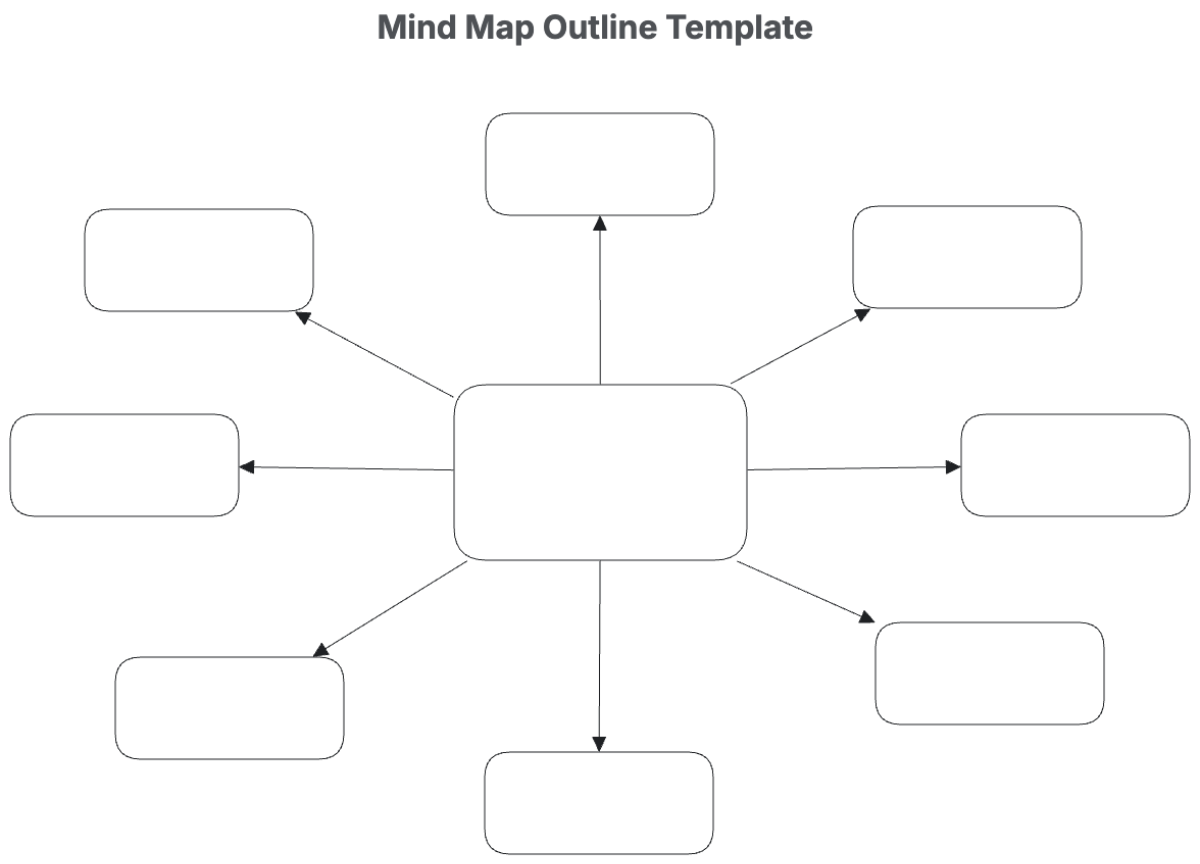
- Use a mind map, which allows you to visualize a big theme in the center that branches off into smaller and smaller details. A mind map is helpful to show concrete components of your book you want to convey.
- Write down questions about your idea that you can discuss with a collaborator or another trusted friend or family member. Having a conversation with someone else can set your ideas in motion.
- Create a list of plot points or chapter ideas in chronological order to get a sense of how your text will progress and where you need to add more information.
These are only a few examples of ways to brainstorm the plot of your book. You can try these, mix and match them, or implement any other brainstorming activities you know. At the end of the day, the goal of brainstorming is to help you write the book of your dreams — nothing you conjure in this process is final.
Developing Characters
The characters of your book are what keep readers engaged and coming back for more. Think of one of your favorite books. You probably enjoyed the story so much because you became invested in the characters and they felt like real people. Your goal is to create fully fleshed out characters with distinct traits and backgrounds.
If you have some or all of your basic plot beats figured out, you should already have some idea of what your characters will look like. After all, they are the ones that will be the driving force of the story.
Before writing, it would be helpful to list out all your characters, or at least some of the most important ones. From there, you can write specifics about their mannerisms or lives that you can refer to when writing. Even if you will not use every character’s entire backstory, knowing what motivates them will help you write their actions and dialogue.
Start Writing a First Draft
Now comes the part you have been waiting for from when you first dreamed up the idea of your book: writing. Putting pen to paper is the crux of creating your book. With your plot outlined and characters developed, writing chapters and scenes should be relatively smooth. It might even be fun! Remember that things will change while you are writing. If you start with a strong foundation, you will be able to craft a three-dimensional manuscript that you will be able to submit for publication.
Filling in the Gaps
With a first draft comes your first round of revisions. There is no guide for how you choose to edit and fill in any missing gaps in the story. Some authors choose to rewrite entire sections, some just add to what is already written. Regardless of the direction you take with your draft or how much you revise it, make sure you are proud of the end result.